

Key Takeaways
- Australia’s major industries remain among the most concentrated in the world, trading competition for stability and scale.
- Consumers gain reliability but face higher prices and fewer choices across banking, supermarkets, beer and funeral services.
- Regulators like the ACCC and APRA play a growing role in balancing efficiency with genuine market competition.
From beer taps to bank branches, supermarket aisles to funeral homes, market concentration defines much of Australia鈥檚 commercial landscape. Across multiple sectors, a handful of major players control production, distribution and pricing power, creating efficiencies that can stabilise markets but often at the expense of competition and innovation. To unpack how these dynamics play out across the economy, four 91社区 analysts share their perspectives on the effects of oligopolies in their respective industries:
- Michael Doyle: Beer Manufacturing
- Matthew Reeves: National and Regional Commercial Banks
- Jayson Cooke: Supermarkets and Grocery Stores
- Andrew Ledovskikh: Funeral Directors, Crematoria and Cemeteries
Together, their insights reveal how concentration shapes not just profitability, but the competitive and regulatory future of Australian industries.
Do oligopolies in your sector/industry lead to greater efficiency and stability or do they reduce competition and innovation?
Michael Doyle: While oligopolies in the Australian Beer Manufacturing industry lead to some efficiency and stability, they also reduce competition and innovation from smaller manufacturers.
Major players Asahi and Lion achieve solid economies of scale in production, distribution and marketing, with both companies investing heavily in automation to replace labour with technology. These investments reduce per-unit costs and enable competitive pricing on mainstream products. Larger brewers' scales enable strong investments in brewing technology and marketing that smaller brewers may struggle to match.

These efficiency gains come at a competitive and innovative cost. Tap contracts let dominant brewers control between 85% and 90% of beer taps through lucrative contracts that include rebates, cash incentives and upfront payments in exchange for long-term exclusivity arrangements. These contracts have been criticised for limiting independent brewers鈥� access and reducing competition and consumers鈥� choice. While major brewers invest in product development, innovation is often driven by independent brewers, who鈥檙e more likely to use experimental brewing techniques. Although, as these brewers face barriers from the oligopoly's control over distribution and retail shelves, innovation in the industry is limited.
Matthew Reeves: For banks, the dominance of the Big Four (CBA, NAB, Westpac and ANZ) contributes to high levels of stability in the National and Regional Commercial Bank industry. The high level of concentration implies that each bank has a large customer base of households and businesses with diversified portfolios like home mortgages, commercial mortgages, other business loans and trading and investment securities. Due to their dominance, the major banks can maintain high and stable profit margins. Strong profitability then allows them to grow their asset base.
As the last major bank collapses occurred in the early 1990s, the industry is now highly stable, though the oligopolistic nature of the industry has reduced efficiency. This means higher fees and slower innovation. Due to the Big Four鈥檚 dominance, they've less incentive to introduce new products.
Jayson Cooke: Australia鈥檚 supermarket industry is dominated by Coles and Woolworths, with ALDI, Costco and IGA (owned by Metcash) serving as smaller competitors. This oligopolistic structure delivers efficient supply chains and consistent nationwide service, driven by the scale and rivalry that historically led to retail innovations like self-checkouts and large-format stores.
Coles and Woolworths show little incentive to compete on price, often mirroring each other鈥檚 pricing, which discourages direct competition.
In practice, the market鈥檚 strength in logistics and stability comes at the cost of meaningful price competition and bold retail innovation, leaving the longer-term path for competition unresolved.
Andrew Ledovskikh: While there are some efficiencies in terms of larger entities鈥� stronger buying power, the most significant impact is reduced competition in the funeral industry.
The issue is that the Funeral Directors, Crematoria and Cemeteries industry operates an oligopoly by stealth. The two largest players make regular bolt-on acquisitions of funeral homes, but often either maintain the brand or roll the acquired business into one of the dozens of national or state chains they operate. This creates an environment where customers may shop around between different brands, not realising they鈥檙e getting quotes from the same company. It would be like realising both Coles and Woolworths are owned by the same company 鈥� it raises questions about the level of competition and how prices are being set, and prices for funeral services have outpaced inflation consistently for decades.
Where, if at all, do consumers gain advantage in oligopolistic markets in your industry?
MD: Consumers benefit from lower prices on mainstream products and consistent supply stability. The dominance of the two major brewers, Asahi and Lion, enables them to engage in aggressive pricing on mass-market lagers. Particularly at major retailers like Dan Murphy's, owned by Endeavour Group, and First Choice Liquor, owned by Coles Group. This price competition provides savings for consumers prioritising affordability and familiarity. A stable supply is another benefit to consumers, as the major brewers鈥� nationwide distribution networks ensure reliable availability, helping them weather disruptions better than smaller operators.
MR: Less competition within the banking industry means consumers face higher fees. Banks are also able to offer lower deposit rates and higher lending rates, meaning it costs more to borrow and less is received in interest, which boosts profitability.
On the other hand, the high stability of the industry and the status of the Big Four as 鈥榯oo big to fail鈥� means the risk of a major banking collapse is extremely low. As a result, customers can have high confidence that they won鈥檛 lose access to their funds.
JC: Consumers have a mixed experience under Australia鈥檚 supermarket oligopoly. Coles and Woolworths offer extensive product variety and national coverage, providing a convenient one-stop shop. Competition from ALDI has spurred Coles and Woolworths to introduce private-label options and weekly promotions, forcing some price restraint, especially on staple items.
Coles and Woolworths don鈥檛 compete aggressively on price, individually maintain stable profit margins and don鈥檛 always pass on savings to consumers. In areas without ALDI or independent supermarkets, shoppers have few alternatives and see little meaningful price relief or innovation. Although the current structure provides convenience, stability and range, it limits genuine competition and keeps grocery prices higher than they might otherwise be for consumers.
AL: In the current state of the funeral industry, there鈥檚 little advantage to the customer.
If anything, the hidden oligopoly creates an information asymmetry that makes it hard for customers to get a good deal. Companies operating multiple brands in specific regions can engage in price discrimination, limiting competition and driving up costs for consumers. This tactic also discourages companies from providing customers with the best service, as companies know that even if they lose a customer, the funeral services company that customer engages next will likely be another of their brands.

states that the industry is rife with poor practices, with multiple findings against companies for misleading claims and poor pricing transparency over the past decade.
How does Australia鈥檚 level of industry concentration compare to international comparisons?
MD: Australia's beer industry is highly concentrated compared to many international markets. The Independent Brewers Association (IBA) states that and its beer market is among the world鈥檚 most profitable due, in part, to the Asahi and Lion duopoly.
The United States and Canada exhibit similar structures in their beer markets鈦�, with Anheuser-Busch and Molson Coors controlling 52.6% and 75.1% of the market, respectively. On the other hand, the United Kingdom presents a more fragmented, competitive landscape. Its market includes four major brewing companies competing more evenly for market share, with Heineken holding 20.7%, AB InBev holding 18.2%, Molson Coors holding 16.6% and Carlsberg holding 15.4%. This distribution creates a more balanced oligopoly with no one dominant player as seen in Australia or Canada. The United Kingdom鈥檚 beer market remains highly competitive among major players, with the craft and real ale segments offering genuine alternatives.
MR: When looking at market share in the banking industry, it鈥檚 better to look at asset share rather than revenue because the latter can be affected by differences in margins. Based on asset size, the market share concentration of Australian banks is comparable with concentration in other countries. In 2021, the top five banks in Australia account for 91.2% of industry assets, compared to 87.8% in New Zealand, 84.8% in Canada, 86.1% in Ireland and 94.2% in Germany. Although, this is lower in the United Kingdom and in the United States at 59.9% and 49.7%, respectively. The United Kingdom has a very outward-looking economy, which has encouraged multiple financial institutions to exist and prosper. The banks鈥� lower market share concentration in the United States can be attributed to the country鈥檚 vast population, large number of states, sizeable geographic area and substantial economy.

JC: Australia鈥檚 supermarket industry is among the world鈥檚 most concentrated. Woolworths and Coles鈥� market share at just over 68% of the entire market in 2025-26. With ALDI, IGA and Costco鈥檚 market share at just over a collective 20%. This level of dominance is rarely seen in other developed countries. The United States鈥� top four supermarket chains hold just under 40% of the market share. In the United Kingdom, the top four supermarket chains account for around 65% of the market share 鈥� far less than the combined share of Australia鈥檚 top two.
Australia鈥檚 supermarket concentration has clear effects. Coles and Woolworths now post profit margins higher than almost all their global peers 鈥撯仩 a significant change from 2008, when their margins were far closer to the United States鈥� and the United Kingdom鈥檚. This mainly stems from the economics of the situation 鈥撯仩 weak competition can enable the big two to mirror each other鈥檚 prices and sustain higher mark-ups, while more fragmented markets tend to see lower prices and tighter margins through competition.
Reduced rivalry limits supermarkets鈥� incentives to compete on price. Although, while profit margins are higher than those of international counterparts, the ROI is often lower, as Australia's geography makes set-up more expensive.
AL: In terms of oligopoly, the funeral industry isn鈥檛 regularly discussed so it鈥檚 harder to gauge whether other countries have similar issues. 91社区 research shows that the top companies in the United States and the United Kingdom maintain approximately 10% market share compared to InvoCare鈥檚 share of over 25% in Australia. In turn, Australia鈥檚 issues seem to be an extreme example. By its nature, funeral services tend to be fragmented. Companies in the industry are often intergenerational family businesses, with small businesses scattered across different regions and cities. There aren鈥檛 significant economies of scale in the industry, so consolidation hasn鈥檛 been a common trend worldwide. While there might be similar issues overseas, Australia is a standout for the scale of its market share concentration.
What role does regulation (e.g. the ACCC) play in shaping the balance of power in your sector/industry?
MD: The ACCC plays a crucial role in monitoring the beer industry to promote competition and consumer protection. Although, critics argue that its actions have been insufficient in balancing power against the oligopoly.
The ACCC's tap contracts investigation examined exclusivity provisions and volume requirements at 36 venues, Criticised by the IBA, the decision allowed contracts to continue and maintained the major brewers鈥� control of around 85% of on-premise taps.
The ACCC鈥檚 approval of mergers has been criticised for increasing the industry鈥檚 market share concentration. In 2020, the commission approved Asahi's acquisition of CUB. The ACCC also approved Lion's 2021 acquisition of Fermentum, allowing the major brewer to absorb a smaller craft competitor. Polling shows that over 50% of Australians support an ACCC inquiry into the duopoly, reflecting consumers鈥� awareness of the beer market鈥檚 industry structure.
Beyond the ACCC, excise tax regulation influences competition. The excise remission cap is the maximum amount of excise duty that a beer manufacturer can claim back each year under the government鈥檚 alcohol tax relief scheme. Currently set at $350,000, The cap benefits small and independent brewers, aiming to level the playing field by reducing the tax they pay on production, freeing up cashflow for reinvestment or profit.
MR: Regulation plays a crucial role in shaping the balance of power of the National and Commercial Bank industry. Introduced by the Labor Government in 1990, the four pillars policy bans the merger of the country鈥檚 four largest banks. This policy isn鈥檛 legislated and is up to the government of the day to uphold. Australia鈥檚 banking system is regulated by the Australian Prudential Regulatory Authority (APRA). Under APRA rules, the banks are subject to rigorous liquidity, capital and governance rules that make it difficult for new competitors to enter the industry. While Judo Bank has successfully entered the business banking space, targeting small and medium enterprises,
JC: Regulation is central to shaping Australia鈥檚 supermarket industry and curbing Coles鈥� and Woolworths鈥� dominance. In March 2025, the ACCC claimed it needed more power to scrutinise supermarket mergers and the acquisition of retail sites with the aim of stopping the big chains from quietly expanding their control. Since 2019,
The ACCC also investigates market behaviour. Both Coles and Woolworths have faced scrutiny and legal action for mistreating suppliers and misleading discount pricing. As a result, the Food and Grocery Code of Conduct was introduced to protect suppliers' rights. Despite this, the ACCC鈥檚 latest inquiry found that many suppliers continue to report pressure from the supermarket giants.
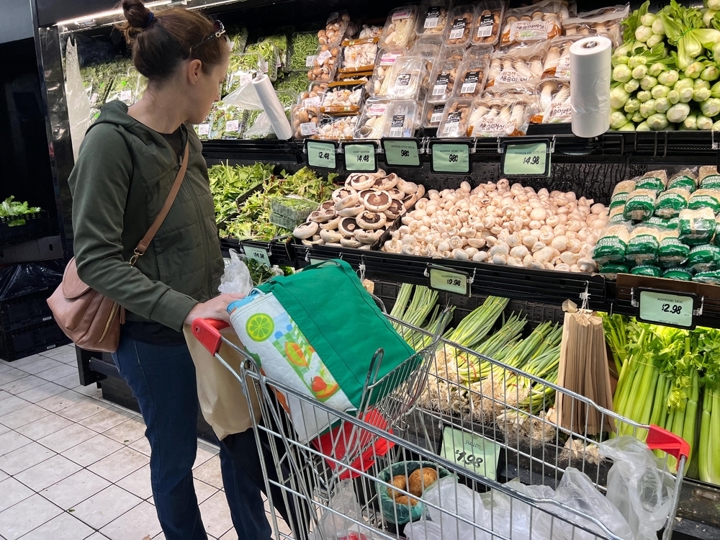
The ACCC鈥檚 Supermarket Inquiry report outlined 20 recommendations, like mandatory online price transparency, increased oversight of loyalty programs, stricter reviews of pricing tactics and planning reforms to support new competitors. The commission also advocated for providing stronger support to independent and community supermarkets to boost local competition. While regulation can鈥檛 create new rivals directly, it can hold the industry accountable and seek to level the playing field. The future balance of power for Australian supermarkets will hinge on whether these recommendations are implemented, whether international supermarkets join the fray and intensify competition, and the extent of further measures to promote greater rivalry among existing supermarket chains.
AL: The ACCC has clamped down on the funeral industry in recent years, undertaking a review of the sector in 2021. The review included negative findings around price transparency and misleading advertising, creating a strong impetus for reform and civil penalties. The ACCC also set up an enforcement program to monitor the sector on an ongoing basis, undertaking multiple proceedings for misleading advertising and unfair contract terms and pricing practices over the past five years. The ACCC鈥檚 investigations and reporting seem to have put a dent in pricing growth, narrowing the gap between funeral costs and CPI growth. The report has also driven some state governments to increase regulation of the sector in an effort to address the identified issues. In 2020, New South Wales updated its regulations to increase price transparency in the industry. Western Australia passed new laws to do the same in 2021, followed by Queensland in 2022, South Australia in 2023 and Victoria in 2024.
Final Word
Across industries, Australia鈥檚 oligopolies reveal a shared tension between stability and stagnation. Concentration often delivers the predictability that investors and consumers value, whether through the steady supply chains of supermarket giants, the robust balance sheets of major banks, or the nationwide distribution networks of dominant brewers. Yet this same dominance can limit innovation, erode consumer choice and entrench high profit margins. As each analyst notes, efficiency achieved through scale frequently comes with a trade-off: reduced dynamism and fewer pathways for new entrants to challenge the status quo.
Looking ahead, the balance of power will hinge on how effectively regulation can foster genuine competition without undermining the operational strengths that oligopolies provide. The ACCC鈥檚 evolving scrutiny of supermarket practices, merger activity and price transparency across sectors points to a shift toward greater accountability. Still, the broader question remains: can Australia maintain the benefits of efficiency and stability while rekindling the competitive energy that drives innovation? The answer may determine the shape of its markets in the decade to come.