
Key Takeaways
- Chancellor announces a raft of tax increases and spending cuts aimed to control national debt.
- The OBR forecasts that the UK is currently in recession.
- Package of targeted measures of support plans to tackle inflation.
On 17 November 2022, Chancellor Jeremy Hunt delivered the Autumn Statement 2022. Set against a backdrop of high levels of government debt and soaring inflation, the Autumn Statement reversed almost all of the measures announced in the Growth Plan 2022, with the recently appointed chancellor opting for a path of consolidation of public finances.
In pursuit of a return to economic stability, the Autumn Statement consists of a package of tax increases and spending cuts forecast to improve public finances by 拢55 billion by 2027-28.
Thursday鈥檚 announcement included freezes and reductions to tax thresholds, an extension to the energy windfall tax and slower growth in public spending. There were also measures to support household finances, including extra support with energy bills and an increase in the National Living Wage.
Alongside the Autumn Statement, the Chancellor presented the latest economic and fiscal outlook published by the Office for Budget and Responsibility, which forecasts a year-long recession from Q3 2022.
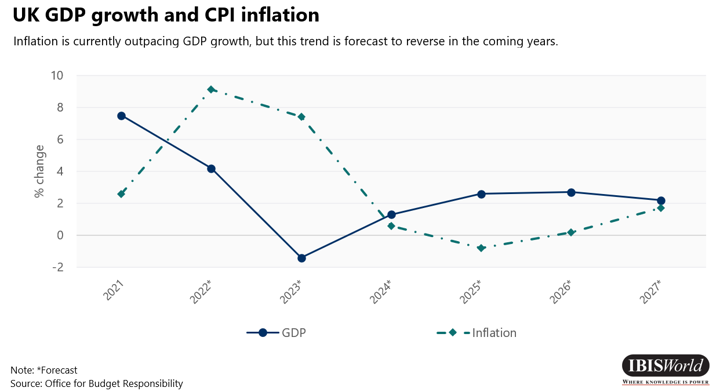
The spending watchdog projects a 1.4% fall in GDP in 2023, with average inflation of 9.1% and 7.4% in 2022 and 2023 respectively contributing to an anticipated 7.1% cumulative fall in real household disposable income from 2021-22 to 2023-24.
Below, we have highlighted the main takeaways from the Autumn Statement 2022, along with which UK industries are likely to be most affected by the announcements.
Taxes
- Income tax, National Insurance and Inheritance Tax thresholds will be fixed at their current levels up to April 2028. However, from 6 April 2023, the top 45% additional income tax rate threshold will be reduced from 拢150,000 to 拢125,140.
- The Dividend Allowance will be reduced from 拢2,000 to 拢1,000 from April 2023, followed by a reduction to 拢500 from April 2024. From April 2023, the Capital Gains Tax allowance will also be reduced from 拢12,300 to 拢6,000, and to 拢3,000 from April 2024.
- To support the housing market, the Stamp Duty Land Tax cut will remain in place until the end of March 2025.
- The government is providing targeted support for businesses to help protect from the full impact of inflation, with a 拢13.6 billion tax cut over the next five years, benefitting 700,000 businesses. This includes freezing the multipliers in 2023-24; increasing and extending the relief for retail, hospitality and leisure to 75%; and upwards transitional relief caps. Additionally, the Annual Investment Allowance will be set at a permanent level of 拢1 million from April 2023.
Industries most affected:
Energy
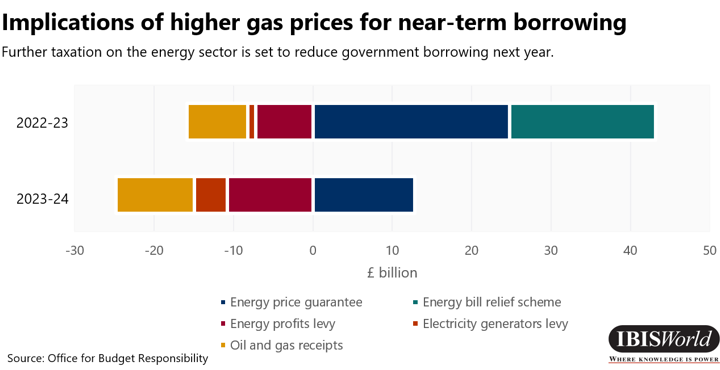
- The Energy Price Guarantee will be maintained through the winter, before rising to 拢3,000 per year from April 2023 to the end of March 2024.
- The government is setting a national ambition to reduce energy consumption by 15% by 2030, with new government funding worth 拢6 billion for energy efficiency to be made available from 2025 to 2028.
- The Energy Profits Levy will be increased by 10 percentage points to 35% and extended to the end of March 2028.
- A new temporary 45% Electricity Generator Levy will be applied to the extraordinary returns being made by electricity generators from 1 January 2023, helping to fund continued government support for energy bills.
- As part of efforts to improve the UK鈥檚 energy security, the government has committed to proceeding with the Sizewell C nuclear plant.
Industries most affected:
- Electricity & Telecommunications Infrastructure Construction
- Electricity Production
- Electricity Supply
- Gas Supply
Public services
- Existing departmental spending will be maintained for the current Spending Review period (until 2024-25) and then will grow slower than the economy, at 1% a year in real terms until 2027-28.
- The government is committing 拢600 billion of planned public sector investment over the next five years, meaning that public-sector net investment as a proportion of GDP will average 2.5% over the period. Much of this spending will be on delivering major infrastructure projects in energy, railways and telecoms.
- Up to 拢8 billion of funding will be made available for the NHS and adult social care in England in 2024-25. NHS in England is set to receive an additional 拢3.3 billion from the government in both 2023-24 and 2024-25.
- Adult social care is getting a boost of 拢2.8 billion in 2023-24 in England, followed by 拢4.7 billion in 2024-25. The government is also delaying the roll-out of adult social care charging reform by two years, to October 2025.
- In the education sector, core schools budget in England will receive an additional 拢2.3 billion of funding in both 2023-24 and 2024-25, bringing the total core schools budget to 拢58.8 billion in 2024-25. This funding rise will provide an average cash increase of over 拢1,000 for every pupil by 2024-25, compared to 2021-22.
Industries most affected:
- Building Project Development
- Electricity and Telecommunications Infrastructure
- General Secondary Education
- Hospitals
- Primary Education
- Railway and Underground Railway Construction
- Road and Motorway Construction
Other key announcements
- From 1 April 2023, the National Living Wage for people aged 23 and over will increase to 拢10.42 an hour, up 9.7% from 拢9.50 currently.
- Overseas aid will remain below the official target of 0.7%, being kept at 0.5% over the next five years.
- Public spending on R&D will rise to 拢20 billion a year by 2024-25, marking the largest increase in R&D spend over a Spending Review period.
- An additional Cost of Living Payment of 拢900 will be provided to households on means-tested benefits, as well as 拢300 to pensioner households and 拢150 to individuals on disability benefits in 2023-24.
- The government has committed to raising benefits, including working-age benefits and the State Pension, in line with inflation from April 2023, ensuring they increase by over 10%.
- Local authorities in England will be given additional flexibility in setting council tax by increasing the referendum limit for increases in council tax to 3% per year from April 2023. In addition, local authorities with social care responsibilities will be able to increase the adult social care precept by up to 2% per year.
- From April 2025, electric cars, vans and motorcycles will begin to pay VED in the same way as petrol and diesel vehicles.